 |

|
|
THE FOLK ART
AND CULTURE OF GUJARAT Gujarat possesses natural beauty in great bounty. The East is covered by Sahyadri and Satpuda mountain range. In the West is the desert of Kachchha and Arabian Sea (Ratnakar Sagar). In the North are the hills of M'ount Abu and Aravalli and in the South the river Daman Ganga flows through all the times. Amid this glory, the ocean abounding in folk culture has rhythmic cadence and gentle breezes in the life of its people and that is its ethos. Man : The creator of Folk CultureThe word folk culture consists of two words. 'Folk' and 'culture'. 'Folk' and 'of the folk'-'pertaining to the folk'-being used in expression since Vedic times. That which does not relate to Vedas has been termed 'of the folk'-'pertaining to folk'. In this word 'folk culture''folk' means a group of people (not small) engaged in agriculture and agri-based occupations and live amidst the age old` traditions, amid the u nde r-cu rre nts of everflowing tradition, that includes rustic living in rural areas as well as forest dwellers of hilly areas. Orlgin of Culture of Gujarat
Folk culture is the creation of the folk mass. It is the collective outcome. People for the sake of their conveniences, facilities and began with some rites-rituals, and continued traditions which subsequently happen to be the main aspects and ingredients of folk life. ihus, literature arts, creative activity and religion-the main and supportive pillars of folk culture are the creations of human endeavour and not the outcome of Nature and godly efforts. Therefore it could be said that folk culture is as old or ancient as th e human race on earth. Genesis of Folk-CultureFolk-culture of Gujarat must have its origin on the banks of river Sabarmati where men of old living in KUBAS (round shape huts) prepared by them might also have created its cradle. Whereas folk culture of Saurashtra (SORATH-SAURASHTRA) had its cradle in NESDA wherein forest dwellers engaged in animal husbandry must be its original craftsmen. Research by Dr. Sankalia on the Sabarmati Valley Civilization supports this fact that before the development oi Mohenjo-Dero and Harappan civilization of Urbanity, folk civilization of nomadic tribes was in existence. Reminiscences of that civilization even today are visible in worship of an-imals, plants, trees, and of the deities-gods and goddesses and even in the worship of or faith in BHUVA necromancers and removers of ills and evils through magic, strange recitation of mantras and performance of irrational rituals. Folk-Culture amid Nature's BountySince ancient times, human beings had g staned living in lush green torests and hills on the banks of rapidly flowing rivers and on ~ the wide and vast coasts of the seas. The people of Gujarat are endowed in their living and culture with varied aspects and elemental simplicities of that very Nature which has given them love of nature, simple pleasures, love for truth, nonsophistication and straight-forwardness, being the dominant factors shaping their lives and culture. From the deep and narrow valleys of high dyked hills, streaming and flowing rivers have nourished i? the life of the folk, virtues of valeur, bravery and chivalry coupled with love and loyalty. Growth of Gop culture in GujaratOn account of human beings settled in this pleasant soil of Gujarat with a coast of sea of about 1600 kms to its West, since ancient times, the shaping spirit of its culture is naturally the endless sea and maritime climate. About eight thousand years ago, a tribe called NISHAD living the life of fishermen put their first steps on the land of Gujarat. KOLI, KHARVA, VAGHER, and MIYANA of the present are considered as sucessors to NISWAD tribe. In fifth century B.C. came to Gujarat lonians, Beks, yens and Greek tribes and brought with them wooden deities and worship of Gods and Goddesses, Reminiscences of Greek culture relating to this are still found extant in MER community of BARDA hills. About five thousand years ago from amongst the wandering tribes that came to Gujarat, Gop culture emerged. YADAVA and AHIRA coming from Mathura and Brindavan brought with them RAASLILA (art of dancing with singing, using flutes and wooden sticks). Their daughter-in-laws taught LASYA NRITYA to the gopis of Dwarka. Dandiya naas of today in its origin is the gift of that tribe and this GOP culture subsequently gave birth to several unique festivals in Gujarat. It also generated fairs(MELA) giving joy and rapture to human hearts both of males and females. During Tenth century, came to Saurashtra white HUN (Mongols) who brought here SUN worship. This HUN of yore are the KATHI Darbars of our time. Horse, she-buffalo and weapons are the main ingredients of their culture. Gujarat-Conglomeration of Folk TribesNumerous sea-faring tribes came to the seacoast of Saurashtra. Anthropologists believe that most of the tribes that settled in Gujarat, have come from other regions of the country and the continent. From North came Aryans, Rajputs and Gurjars. From South Kanbis, and Siddis and Arabs Itherefore Ratnakar Sagar bears the name of Arabian Sea) came through sea routes. Baluchs and Lohanas came traversing the desert of Kachchha. Subsequently from time to time with the passing of years came more than one hundred and seventy tribes in Kathiavad (The region of Kathis) viz. OD, ATIT, SATWARA, SARANIYA, SALAT, SIDI, JAT, MAHIYA, DHADHI, CHAMTHA, BALOC H, BABAR, LANGHA, KHARAK, VANJARA, RAWAL, PURBIYA, TARGALA, THORI, KHOJA, KUMBHAR, SANGHAR, SUMRA, SARVAN, BHANGI, BHOPA, BHOI, LUHARIA, LIMBADIYA, MUMNA, Under the influence of Islam, Kshatriyas and a tribe known as Kantiavaran shone out themselves as fighters and swordsmen. Their fighting spirit and warriors' blood have greatly influenced in shaping and moulding the life of other tribes in Saurashtra as well. As a result horse-riding, sword-playing, and art of using and manning weapons have been greatly developed by the folk of this religion. Ethos includes virtues such as faithfulness and chivalry. Unique Conglomeration of Several CulturesAll the
tribes that put their feet on the soil of Gujarat since primitive times
have brought with them their traditionally owned varieties of costumes and
dresses of varied colours and shapes, deities-gods and goddesses, art of
singing, dancing, music and even instruments, literature-folk tales and
lores, customs, rituals and also festivals, beliefs, concepts of ethics and
aesthetics, ways and manners of living and enjoying life including eating and
drinking habits. Numerous tribes in the process of churning of the ocean, in
folk creating culture have contributed what was their own and unique to make
the common culture for the folk, rich and prosperous. The streams and
currents thus intermingled flowed as such that the culture today is finally
the culture of the folk of Gujarat. Thus folk culture is not the outcome of
efforts of an individual or of a group of few people. in a way many rivers
create the sea and many seas the ocean, so also it is the mixture and
mingling of several tribes that created varied forms and substance of
folk-culture as we have it today and all such varied aspects of various
tribes have given shape to the folk culture. Settlement
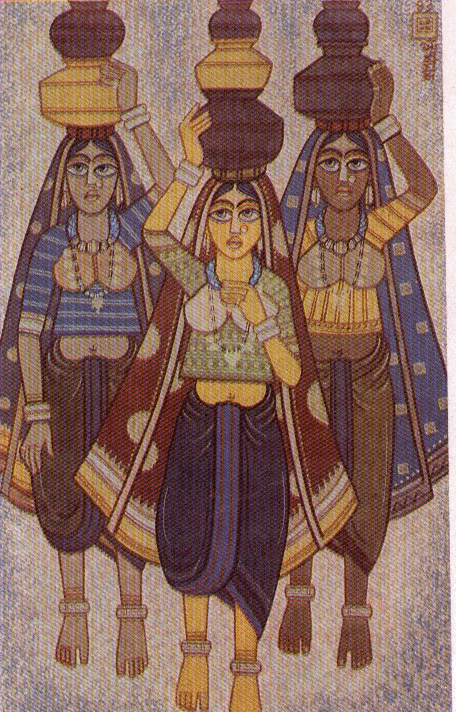
of Folk Tribes in Traditionally Extant Regions To comprehend the folk-culture of Gujarat, it is necessary to have awareness of its different PANTHAKAS or regions. In Gujarat, traditionally known as AABHIRDESH-KACHCHHA has VAGAD, GARDA, PAVAR, MA KVAT, M EAAN i, ABDASO, MODASO, KANTH I and PRANTHAD. In Kathiavad, there are OKHAMANDAL, HALAR, MAC HCH H U KANTHO, ZAR MARIO ZALAWAD, PANCHAL, BARADI, NAGHER, SIMAR, BABARIYAWAD, VADAK, VAGAD. In Gujarat there are CHORAD, JATWADO, NAHER, VADHIYAR, DHANDHAR, CHHAPPAN, PATANWADA, DANDHAVY; and Towards south Gujarat are KHAMBHATBARU, BHALBARU, VANKAL, SANKHEDA, MAHUVAN, KANTHAL, NIMAD, KHANDESH, MEVAD, RA3 MATHOR, DANG, BAG LAN , and then BHAL, KANER and NALKANTHA of Ahmedabad District. All the various tribes of these regions have developed regional culture typical to that tribe. Costumes and
Ornaments in Folk Life It is
necessary to study the life of the folk in order to know the folkculture.
Artistic costumes and dresses of varities of colours and of innumerable types
could be seen its folk using in Gujarat. Dresses greatly differ from caste to
caste, tribes to tribes. Dresses add to the bravery of men and that which
also protect. Dresses dyed in deep colours and richly embroidered clothes
adorn their bodies. Together with variety of ornaments ANAVAT-VINCHIYA,
KADALA and KAMBIYU, ZUMNA, TUNPIYA, TROTIYA in different shapes add to the
beauty of the bodies, both of men and women. The culture also introduced the
beautifying aids such as Mehendi, Chhundana (tattoo) and Alata. Necessity
brought the use of shoes, stitched and decorated artistically, to the taste
of art-loving folk. This beautious culture did not remain confined to aspects
of beautification of human bodies. Culture of
House Decoration Folkwomen
ado rn ed rooms and verandahs of their dwellings and houses, by rubbing the
floors and plastering walls with clay mixed dung (gargormati) and Khadi (red
chalk for painting) and Okali (designing'with fingers and palms, the undried
mixture of clay and clung). They decorated BHINTDA (walls) with drawings and
by hanging embroidered wall pieces on festivals. Their rooms beautified with
madi, mand, patara, majus, kothi, kothla, and so on. Just they adorned their
kids-sons and daughters so also for their tamed animals they stitched, sewn
and embroidered colourful pieces seemly to their folk art, traditionally
drawn which then continued flowing into endless ocean of folk culture. Folk Life
Abounding in Folk Literature Breezes of
folk-culture are there in the folk literature. The chief embodiment in this
literature is their folk tales, romance, love stories, tales of chivalry,
adventure and dedication, tales of Nag (cobras considered as deity), othans,
tales of observance and vow, (vratas), of proverbs, sayings, of trees, vegetation, tales of cheaters, of lakes, of ghosts, witches and fairies and
tales of horses of several kinds. Likewise in folksongs there are Garba,
Garbi, Raasda, Prabhatiya or Probiya; sung on marriage ceremonies are the
songs for Mandava, Mayra, · Fuleka, Chori, and songs of Sanji, songs of
Ukardi and Ponkhana, Fatana, Hariali songs of bride's departure after wedding;
songs of sixth day ofchhild birth, of pregnancy ceremony; and songs for
Randal calling; Duhas in which there are chhakadia, Dumeiia and Dodhia; lane
songs Jodakana, Nachaniya and Kudaniya; Charni songs consisting of songs of
seasons, ballads and heroic songs, chhandas; Adivasi songs; Bhavai Songs
consisting of Sorthas, Kundaliya; Rekhta and Panchakada; songs of observances
and vows (vratas) Khayana, Halarda; Mourning songs consisting of Marasia,
Chhajiya, Rajiya and Aaza. During procession of bride groom songs sung with
longer cadence such as Saluka; Ramvada and Chandrawala sung on holi festival
and Aranyu, Sarju, Savalyu sung before the goddess, Prabhati, Pad, Chopai,
Sandhyaarti, Aaradhan-Stavana, Aagam, Pyala Aaambo, Barmashi, Ramgari, Dhol,
Kirtan, Chadkha, Bhet, Kafi, and several others grouped in Bhajans-in all
these types and kinds, there are variations from one region to the other in
its contents, mode of recitations and all that; but one thing is common : the
representation of feelings and emotions of the throbbing folk hearts is the
same lot - the common themes, ever lively and always abounding . Regional
Dialects in Folk Life The study of
folk culture would not be complete unless the dialect and the colloquy-trre
spoken language of the folk of this region is not understood or studied. The
spoken language is different at a distance of every eighteen miles-is the
saying. Thus in Gujarat colloquy Sorthi, Vagadi, Charotari, Marvadi,
Kachchhi, Bhili, Sur-ati etc. of re spe cti ve regions have its own native
words, ~roverbs, sayings dnd innumerable phrases with unique touchiness that
characterises its folk. Naming
Humans & Animals Proper nouns
most prevalent among the folk have typicality for instance, of the males are
Rukhad, Kamlo, Ragho, Rudio, Meio, Poche, Nagj i, Vag hj i, Gaghdubha,
Nondhubha, Parsotam etc; of the females are Zadki, Kadvi, Savii, Daval, Jiku,
Zamku, Nathi, Shivi etc. All such proper nouns are deri ved
traditionally down to the new generations. Folk having gayful and pleasin~
temperament have classified their mares as Pirani, Tajan, Heman, Manki, Pati,
Norali. Fulmal, Resham etc. in all thirty six types: whereas devangi horses
have been termed as Chhabilo, Dhol, Chhanchhal, Reshamio etc. in all about
fiteen. All types of horses account for fifty five. Cows are termed ;as
Jambavi, Kabri, Gori, Jari, Kavli, etc. in all twenty. Kundhinyu
she-buffalloes ct elephant stature have been te rmed as Nagalyu, Bapalyu,
Hetalyu etc. Bullocks. classified as Makdo, Mun zado, Rozdo Kh avdo, B avd o,
Dolio, Kundalo, etc. Besides
names oi step \Fell~AV) wells, (Kuva), river,, streams (Va rivulets IZara),
vehicles, agricivtural plements (santi) and carts (santi--g%da.Xools and
implements for agriculture and ~se of the artisans, as well as household
furt,e have been typically named by folk of tSvarious regions and are worthy
to be colle\d for a separate dictionary. Religious
Observations in Folk Religion
could also be termed as specified aspect of the folk curture. The dominant
element of religious tolerance and the sense of unity in diversities in the
lived by the folk led them to the worship of innumer gods and goddesses and
deities cotisisting of vegitation such as Vad, Piplo, ac~adi; of creeping
animals such as Nag, Noii; of tailed animals such as Vanar (monke)r cow,
crocodile and also of Surdhan (idol i~talled in the house) and Surapura
(instal~d as Khambhi,). Palia-khambi indica8'n9 father-worship are of great
imponance. Among deities several gods and godo~sses in the folk life are
static or native in ~6vgin, \hS-rereas others such as Randalma wee brou9ht in
Gujarat in fourth century with trV advent of Magga Parsee Barhmans tkrought
Punjab having its dominance in the de of the folk of this soil. Each tribe
has its ancestral god and goddess (Kul devta-devi) being worshipped and
offered Novej at particular hours. On austere days as fixed up, with erection
of Mandava; Dakla-musical instrument being played and Bhuvo (mysterious
enchanter) vibrantly turning his head and arms and even body, this way and
that, recites illegible words, as if to please the deity. Thus religion is
tinged with devotion and blind faith in the life of thefolk of all the
tribes. As a normal routine, birds are served at Chabutara; flour and sugar
are served to ants at Kidiyara, cows fed with grass or ~read; dogs given
bread and Brahmins bestowed with gifts of money, food.and food grains - all
this, indicative of the faith of the folk being nurtured as from olden times. Folk Songs,
Folk Dances - full of lyric Life In fact, the
folk dances are the throbbings and the spirit of the folk life of Gujarat.
Among the folkdances are the Garba and Garbi of Mataji-the goddess; then Raas
of Aayar, Mer, Bharvad, and Padhar; then Gheriya Raas, Dandiya Raas, Tappa,
Tipani, Mashira Nritya of Siddis; Swords Raas of gallants, Jag Nritya, Matki
Nritya, Ashva Nritya, Hinch, Hamchi, Titodo, Luvar and Adivasi dances need
mentioning. Lok Nritya-folk dances are supported by folk music traditionally
since ages. Although Bhupali,
Ahir Bhairav, Pahadi and Sarang Raag have its shadows over the folk music, it
is quite distinct from the classical music ever since its origin and growth. Folk
music-instruments Musical
instruments used in folk songs are Dhol, Morli, Pava, Sharnai, Zant, Kanal,
Ekta ro , Ghughra, Manjira, Ravanhattho, Dholak, Duf, Khanjari, Mukhchang,
Sundari, Kanthvas, Kani, Shinghi, Shankh, Bhungal; whereas of the Adivasis,
are Tur, Thali, Bhajania, Bhangai, Zarikath i, Dobru, Ghanglo, Chonku,
Chehkya, Khanglo, Malango, Ambada's Thali, Dhako. Vahali, Dhunak, Dayro,
Karges Khapat, Tad ku, Narhilo, Pavri, Robi, Kah-do, are the chief
instruments. Celeberation
of Folk Festivals Festivals on
religious holidays and folk fairs (LOKMELA) are of uniqe importance in the
folklife as for bringing to them, rapturous joys and colourful gaity. Holi,
Gokul` aatham, Akha trij, Divaso, and Vasantotsav are of seasonal importance.
Whereas Mer tribe's Folk Games Folk-games
are the precious gifts and assets of the folk culture. Boys, would play Moi
dandia, Gedidado, Bhagdati, Aambla Pipli, Dadkidodo, Odakambli, Hadiyu, Jitvu
etc. whereas girls play more interesting games and important among their
games are Dedo Kutvo, Tachak Tildi, Dale Fufufu, Tap Makhi Maru, Chaki Khande
Chokla, Chalak Chalanu, Haka popatdi, Dhabu and Zabu. Grown-ups and adults
play Talwar Samanavir, money on Dhol, aiming, Padva, chopat, ghodadod (swift running),
carts run, taking out branch of a tamrind tree on holi festival. Many such
games among adiwasis are very well known. Folk Recipes
& Dinners Folk culture
is also rich in the habits and pleasures of drinking and eating. The
varieties of recipes have tastes as bitter, sour, sweet, queer, spicy, juicy,
smacky, salty, sapid, flavour, savory, tanging, relishing etc, The recipes of
sweets are of thirty two types and vegetable curries are of sixteen types.
The dishes to serve gods are called 'Rajbhog' and to dignitaries are
'Manbhog'. The most typical in folk life on important occasions are CHURMU
and VEDMI, LADVA, LAPSI, KANSAR, SUKHDI, SHIRO, JADARIYU, TAL SANKARI etc.
whereas for daily food are ROTLA, ROTLI, BHAKHRI, DHEBRA, GHENSH, BODO, RAAB,
coupled with JADARIYU,. KADHI, supported by pickles of Keri, Gajar, Garmar,
and Papad, Sarevda have importance. A poet of Kathiavad has composed on
BAJRA-ROTLA the typical food of ordinary folk, a nice stanza which runs as
follows :"it
there be Bajra of Mangalpur, For flour
making, from Dharangadhra's stone, turing wheels, Clay pan
prepared by Didhadia's potter; Dry cowdung
cakes for fuel gathered from the wasteland of Golasani village,And then
Rotlas from snufflike flour, prepared at the break of day, by a house wife Having
physique of a Bhimnath bull; Baked by giving very low heat, of copper colour
in appearance;Together
with it be the curry ot bringals And fresh warm milk. Even God
would wish to come down to earth To enjoy
this simple yet pleasant folk-food.There is
also a DUHO on this:O God : let
thou come down to our Kathawad,Some day
perchance unknowningly;and be our
guest and I bet;I would make thee forget thy heaven,O shamla
:(thou cloud coloured on e) The folk
have a unique system at dinner. Chakla and
bajathiya for sitting and putting dishes, Dhichaniya for sitting and putting
dishes, Dhichaniya for support to legs, Vinjanas for fanning and the host
would force house wife to serve more to the guests, young, adults and ageds
as well. Even housewife would not herself leg behind in over-serving
varieties of recipes to the guests. Here one finds how the folk culture has
that noble element of hospitality unique in its own way. PALIY
A-KHAMBt-1I Palia on the
periphery of every village with inscription of valeur and heroics in memory
of noblest of human beings are the pillars of folk civilisation. Palia not
only creates history, but in itself, each of the Palia reveals its history of
human behaviour, full of heroic temperament that has its ethos. It is also
the symbol of hero-worship. So also Khambhi erected in the memory of kins and
kiths speak for itself about the cheri.shed memory of bravely departed. Code of
Conduct of Folk Culture Thus folk
culture through its ways of tivi no , habits, cu stems, traditions and
behaviours takes for itself a form of code of conduct. The call of the
culture from the folk of Gujarat is that of hospitality, nobility,
benevolence, honesty, integrity, generosity and above all character and
grandeur combined to produce beauty of culture. fhis hereditament of
greatness has not fed its folk with pleasure-seeking dullness but in fact has
advocated toils and moils of hard work, noble deeds-the religion of SHRAMA
and DHARMA. It speaks of 'VIJAY' Victory throught Dharma. It speaks of
confluence of all the religions and unity in diversities. |
 Folk
culture could be considered as the psychological expression of ADIMANAV, the
oldest lot of human beings on earth. The concept of religion prevalent among
the folk, their trust, faith, even blind faith, conservatism, old traditions,
customs and E rituals, unwritten literature-that dwelt on tongue and being
recited-fancy and fantasy O of ghosts and witches, hypnotics, Tavlj, deities
and divinities, dresses and costumes, dialects, festivals, celebrations,
brawls, scuffles, duels, combats and battles, arms and weapons, animal
husbandry, navigation, tillage-whatever mentally and physically was available
to the soul of the folk-all this is enshrined in the ambit of folk culture.
Folk
culture could be considered as the psychological expression of ADIMANAV, the
oldest lot of human beings on earth. The concept of religion prevalent among
the folk, their trust, faith, even blind faith, conservatism, old traditions,
customs and E rituals, unwritten literature-that dwelt on tongue and being
recited-fancy and fantasy O of ghosts and witches, hypnotics, Tavlj, deities
and divinities, dresses and costumes, dialects, festivals, celebrations,
brawls, scuffles, duels, combats and battles, arms and weapons, animal
husbandry, navigation, tillage-whatever mentally and physically was available
to the soul of the folk-all this is enshrined in the ambit of folk culture.